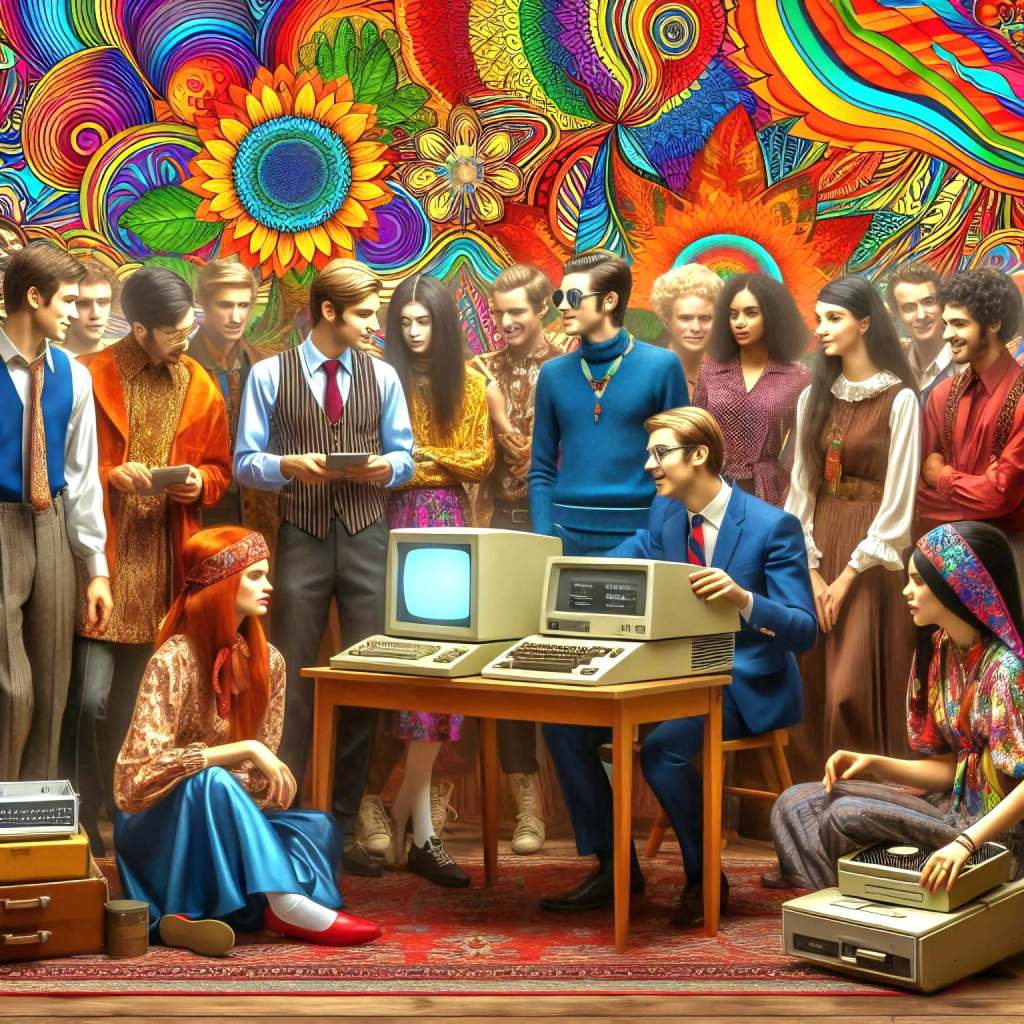
The relationship between the counterculture of the 1960s and the evolution of personal computing may initially appear contradictory. It raises the question of how a movement that often eschewed materialism and industrialization contributed to one of the most significant technological revolutions in modern history. However, the ideals, values, and aspirations of the 1960s counterculture had a profound impact on the development of computing, leaving a lasting influence on today’s digital landscape.
The Democratization of Technology
One of the most important contributions of the 1960s counterculture to computing is the belief that technology should be accessible to all individuals, rather than being limited to institutions and corporations. Prior to the 1970s, computers were predominantly large mainframes operated by universities, governments, and major corporations. The counterculture’s focus on individual empowerment and democratization sparked a new vision: personal computing.
Stewart Brand, the founder of the Whole Earth Catalog, played a crucial role in this transformative movement. His publication, which Steve Jobs famously described as “Google in paperback form,” linked the counterculture’s back-to-the-land movement with technological tools aimed at individual empowerment. Brand and others perceived computers not merely as tools for corporate control, but as vehicles for personal liberation and creativity.
The Birth of Personal Computing Culture
The homebrew computer clubs of the 1970s, which led to the establishment of companies like Apple, exemplified this counter-cultural ethos. These groups, often consisting of enthusiastic individuals who embraced both programming and alternative lifestyles, believed in the revolutionary potential of placing computing power in the hands of everyday people. Although Steve Wozniak and Steve Jobs did not identify as hippies, they were significantly influenced by this culture of technological democratization and individual expression.
The graphical user interface of personal computers also draws inspiration from psychedelic culture. Researchers at Xerox PARC, many of whom were influenced by counter-cultural ideas, developed this interface with the intention of making computers more intuitive and accessible. The emphasis on visual experiences and user-friendly design mirrored the counterculture’s interest in expanded consciousness and new ways of perceiving reality.
Open Source and Digital Commons
The open-source movement, which originated in the 1980s and gained traction with the rise of the internet, reflects the communal ideals of the 1960s counterculture. The principles of freely shared software, collaborative development, and digital commons resonate with the counterculture’s rejection of private property and focus on shared resources. Projects such as Linux, Wikipedia, and Creative Commons licensing embody this ethos of collective creativity and shared ownership.
Richard Stallman’s Free Software Foundation, while not directly linked to the counterculture, promotes similar values: freedom from corporate control, community ownership, and the right to modify and share technology. These principles can be traced back to the counterculture’s commitment to personal freedom and collective responsibility.
Social Media and Digital Communities
Contemporary social media platforms, despite their corporate underpinnings, have roots in the counterculture’s vision of technology as a means for community building and personal expression. The early internet, particularly USENET and early online communities, was shaped by individuals who viewed digital networks as a way to foster the connected, conscious communities sought by the counterculture.
The Whole Earth ‘Lectronic Link (WELL), established by Stewart Brand and others in 1985, served as an early model for online communities and influenced future social platforms. Its focus on meaningful conversation and community engagement reflected countercultural values that continue to influence the design of digital communities today.
Modern Manifestations
The impact of the 1960s counterculture can be observed in various aspects of contemporary technology culture:
- The trend toward informal workplace settings and non-hierarchical organization within tech companies
- The maker movement’s emphasis on individual creativity and technological empowerment
- Cryptocurrency’s vision of decentralized, community-controlled currency systems
- The integration of mindfulness practices and consciousness-expanding concepts in Silicon Valley
- The enduring ideal of technology as a catalyst for social change and personal liberation
Tensions and Contradictions
Nonetheless, there exists an inherent tension between the anti-materialistic, anti-corporate ideals of the counterculture and the significant wealth and power present in today’s tech industry. Many tools and platforms that originally emerged from countercultural influences have now become instruments of corporate surveillance and profit generation, prompting some to question whether the movement’s foundational ideals have been compromised.
Conclusion
The legacy of 1960s counterculture in the realm of computing is complex. While certain idealistic visions may have fallen victim to commercialization, the core values—such as the democratization of technology, individual empowerment, community building, and leveraging technology for social good—continue to influence our perspectives on and development of digital technology.
As we encounter new challenges related to privacy, corporate influence, and the social ramifications of technology, the countercultural vision of computing as a tool for human liberation and connection remains relevant. Acknowledging this historical connection aids in our understanding of both the idealistic foundations of our digital landscape and the ongoing tensions between technology’s empowering
 Software Engineering on the Spectrum