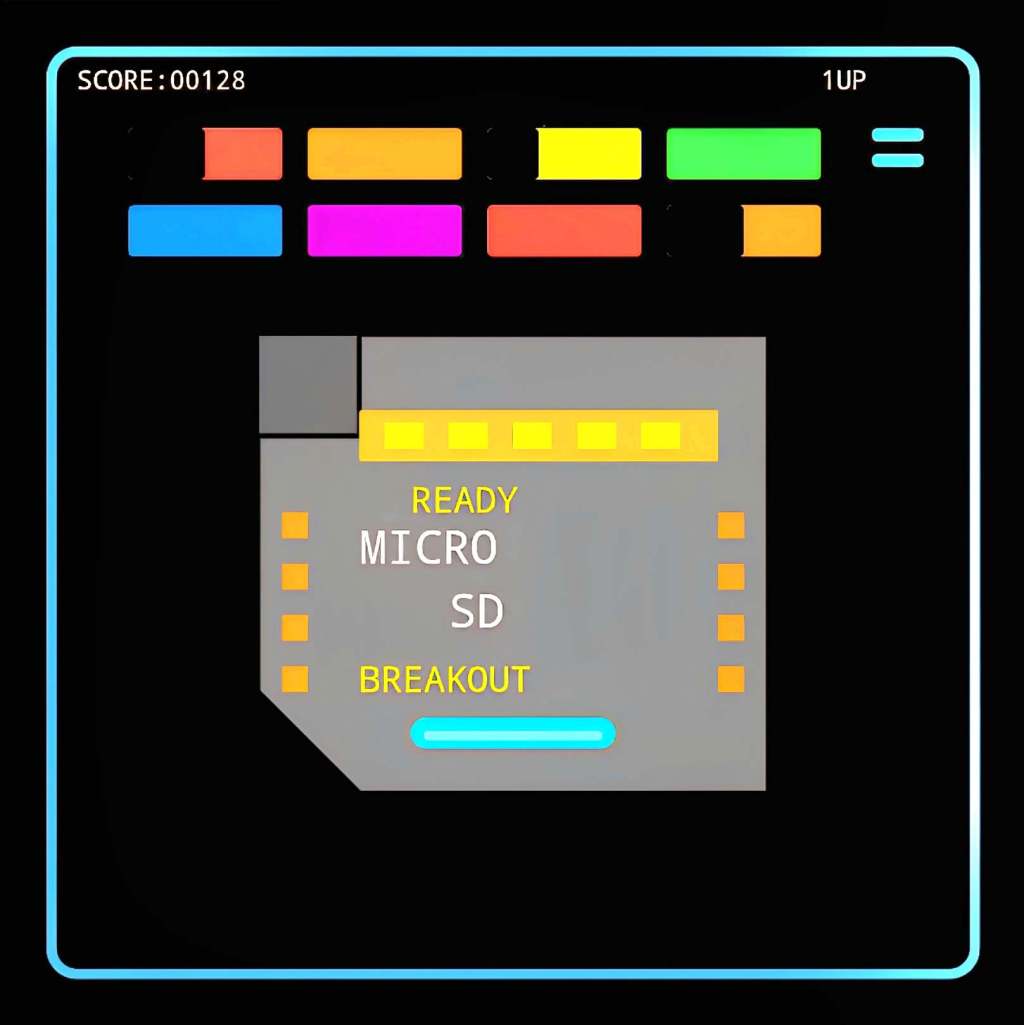
In 1978, when my parents gifted me an Atari 2600, I could not have anticipated that nearly five decades later, I would be inserting a 256GB micro SD card—smaller than my thumbnail—into a Nintendo Switch. That first console, a remarkable achievement for its time, introduced me to gaming with titles such as Breakout, which was contained within a 2,048-byte ROM. Today, I can store over 131 million copies of Breakout on a single micro SD card, a device so compact that 837 of them could fit into the volume of one Atari cartridge. This dramatic increase in storage capacity serves not only as a personal milestone but also highlights the significant transformation in software engineering over the past 50 years, propelled by the continuous advancements in miniaturization and capacity.
In the late 1970s, storage limitations had a profound impact on software engineering. The 2KB ROM cartridges of the Atari 2600 established a hard cap, compelling developers to create entire games within a space smaller than a single email today. Every byte was essential. Programmers employed innovative strategies—such as code reuse, loop optimization, and utilization of hardware quirks—to maximize functionality within the constraints of 128 bytes of RAM and 4KB ROM. Breakout was not merely a game; it represented a testament to human ingenuity under pressure. At that time, software engineering was characterized by scarcity, where efficiency was a necessity rather than an option. For me, as a child engaged in bouncing a pixelated ball off a paddle, it was pure magic, completely unaware of the challenges developers faced to bring it to life.
Transitioning to the 1980s and 1990s, storage limits began to ease. Floppy disks transitioned to hard drives, and ROM sizes expanded into the megabyte range. Consoles such as the Super Nintendo and PlayStation introduced richer graphics and sound, signifying a shift in software engineering priorities. With increased capacity, developers could focus more on user experience rather than simple optimization. Games evolved from basic arcade mechanisms to expansive narratives, as seen in titles like Final Fantasy and The Legend of Zelda. For me, moving from the Atari to these newer systems felt akin to stepping into a transformative experience, even as I continued to be amazed by how much more data a cartridge or disc could hold compared to what my 2600 could manage.
The true revolution, however, emerged at the turn of the millennium. Hard drives expanded to gigabytes and later terabytes, while flash storage—like the micro SD card I utilize today—decreased in size while significantly increasing in capacity. My 256GB micro SD card, with a volume of just 165 mm³, can hold more data than entire server rooms from the 1980s. This shift in storage density has once again reshaped the landscape of software engineering. Whereas Atari developers meticulously managed limited bytes, contemporary engineers contend with gigabytes of assets—high-definition textures, orchestral soundtracks, and extensive codebases. The Nintendo Switch, for example, hosts games such as The Legend of Zelda: Breath of the Wild, which requires 14GB of storage—over 7 million times the size of Breakout. This abundance of storage has granted developers the freedom to pursue ambitious projects, crafting immersive worlds in which players can fully engage.
Nonetheless, this freedom comes with its own challenges. In the Atari era, strict storage constraints encouraged elegance; modern engineers may find themselves less inclined to optimize. Software bloat has become a noteworthy concern, as applications may include redundant code or unoptimized assets due to the masking effect of increased storage and processing power. I have observed this phenomenon on my Switch: some games occupy more space than their complexity would suggest. However, this same abundance also facilitates rapid iteration and experimentation. Developers can implement post-launch updates, a luxury that was unimaginable in 1978 when a cartridge represented a final product. My micro SD card does not solely store games; it retains updates, downloadable content, and even homebrew software, illustrating how enhanced storage density has transformed software into a dynamic, evolving entity.
Reflecting on this journey, it is evident that storage density has not only influenced software engineering but has fundamentally redefined its essence. From the 2KB limitations of my Atari 2600 to the expansive 256GB capacity of my Switch, the progression of my gaming experience parallels a broader narrative. Engineers once crafted minimalist masterpieces; today, they design intricate digital universes. For me, inserting that micro SD card into my Switch is not merely a functional task—it symbolizes 50 years of advancement, bridging the gap between the child captivated by Breakout and the adult who marvels at the possibilities of today.
 Software Engineering on the Spectrum