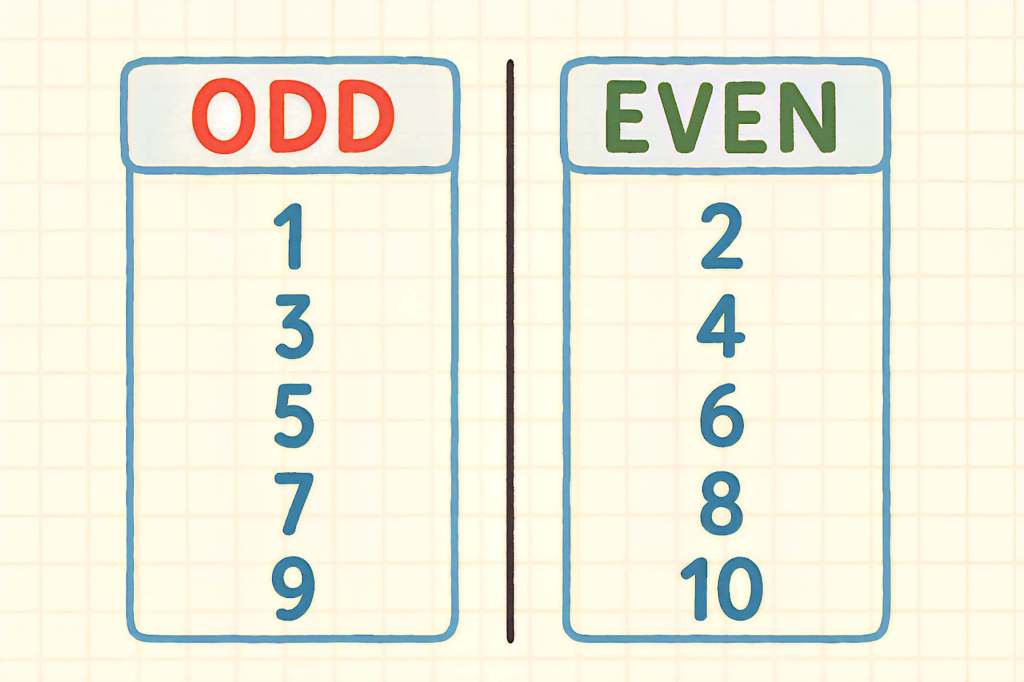
In software engineering, particularly within the field of C#, determining whether an integer is odd or even is a routine task. The conventional method typically employs the modulo operator (%), which yields the remainder of division by 2 (0 indicates even, 1 indicates odd). Nevertheless, there are situations where the use of the modulo operator may not be optimal—such as performance concerns in specific contexts, coding restrictions, or a preference for alternative logical methods. This document examines three distinct techniques for assessing the parity of an integer in C# without employing the modulo operator: the bitwise AND method, the division and multiplication method, and the bitwise shift method. Each technique is supplemented with C# code examples, comprehensive explanations, and an analysis of their respective advantages and disadvantages.
1. Bitwise AND Method
Explanation
The bitwise AND method utilizes the binary representation of integers to ascertain parity. The least significant bit (LSB) of each integer signifies whether the number is odd or even:
- Even numbers possess an LSB of 0 (e.g., 4 =
100in binary). - Odd numbers possess an LSB of 1 (e.g., 5 =
101).
By executing a bitwise AND operation between the number and 1 (number & 1), we isolate the LSB:
- If
number & 1equals 0, the number is classified as even. - If
number & 1equals 1, the number is classified as odd.
This method works because 1 in binary is 001, thus the AND operation solely examines the LSB of the input number.
C# Code Example
bool IsEvenBitwiseAnd(int number)
{
    return (number & 1) == 0;
}

bool IsOddBitwiseAnd(int number)
{
    return (number & 1) == 1;
}

// Usage
int num1 = 7;
int num2 = 4;
Console.WriteLine($"{num1} is {(IsEvenBitwiseAnd(num1) ? "even" : "odd")}"); // Output: 7 is odd
Console.WriteLine($"{num2} is {(IsEvenBitwiseAnd(num2) ? "even" : "odd")}"); // Output: 4 is even
Pros
- Performance: Bitwise operations are highly efficient, executing directly at the hardware level, typically within a single CPU cycle.
- Simplicity: The logic is straightforward and easy to grasp once the concept of the LSB is understood.
- Universality: Applicable to both positive and negative integers, as the LSB determines parity regardless of the sign.
- No Arithmetic: Avoids division or multiplication, which could be slower in specific contexts.
Cons
- Readability: For developers unfamiliar with bitwise operations, the code may not be as intuitive compared to arithmetic methods.
- Limited Use Case: While effective for parity checks, the bitwise AND method has fewer applications in other numerical computations relative to division-based methods.
2. Division and Multiplication Method
Explanation
This approach employs integer division and multiplication to ascertain parity. By dividing the number by 2 (using integer division, which omits decimals) and then multiplying the result by 2, we can compare this result to the original number:
- For even numbers,
(number / 2) * 2equals the original number as there is no remainder from the division. - For odd numbers, the division truncates the fraction (e.g.,
5 / 2 = 2), so multiplying back by 2 results in a different number (e.g.,2 * 2 = 4 ≠ 5).
C# Code Example
bool IsEvenDivision(int number)
{
    return (number / 2) * 2 == number;
}

bool IsOddDivision(int number)
{
    return (number / 2) * 2 != number;
}

// Usage
int num1 = 7;
int num2 = 4;
Console.WriteLine($"{num1} is {(IsEvenDivision(num1) ? "even" : "odd")}"); // Output: 7 is odd
Console.WriteLine($"{num2} is {(IsEvenDivision(num2) ? "even" : "odd")}"); // Output: 4 is even
Pros
- Intuitive: The logic parallels the mathematical definition of even numbers (divisible by 2 with no remainder), making it more accessible for beginners.
- Readable: The code employs familiar arithmetic operations which are generally more understandable to developers not well-versed in bitwise operations.
- Applicability: Division and multiplication are common operations that may align with other sections of the codebase, enhancing consistency.
Cons
- Performance: Integer division and multiplication are slower than bitwise operations, as they involve more complex CPU instructions.
- Potential Overflow Risk: For particularly large integers near
int.MaxValue, intermediate results in multiplication could theoretically induce issues, although this is uncommon in standard use cases. - Less Elegant: The method entails two arithmetic operations and a comparison, making it less concise than the bitwise AND approach.
3. Bitwise Shift Method
Explanation
The bitwise shift method applies right and left shift operations to determine parity. By assigning a right shift of the number by 1 bit (number >> 1), we effectively divide by 2, discarding the LSB. Conversely, shifting left by 1 bit (<< 1) multiplies the result by 2, thereby ensuring the LSB is set to 0. If the final result matches the original number, then the number is even; otherwise, it is odd.
For instance:
- For 4 (
100in binary),4 >> 1 = 2(10), followed by2 << 1 = 4(100), which equals 4 (even). - For 5 (
101),5 >> 1 = 2(10), followed by2 << 1 = 4(100), which does not match 5 (odd).
C# Code Example
bool IsEvenShift(int number)
{
    return (number >> 1) << 1 == number;
}

bool IsOddShift(int number)
{
    return (number >> 1) << 1 != number;
}

// Usage
int num1 = 7;
int num2 = 4;
Console.WriteLine($"{num1} is {(IsEvenShift(num1) ? "even" : "odd")}"); // Output: 7 is odd
Console.WriteLine($"{num2} is {(IsEvenShift(num2) ? "even" : "odd")}"); // Output: 4 is even
Pros
- Performance: Similar to the bitwise AND method, shift operations are quick and executed at the hardware level.
- No Arithmetic: Avoids division and multiplication, which can be advantageous in performance-critical contexts.
- Universality: Applicable for both positive and negative integers, as the shift operations maintain parity logic.
Cons
- Readability: Bitwise shifts may be less intuitive than arithmetic operations and could pose challenges to developers unfamiliar with bit manipulation.
- Complexity: The method requires two operations (right shift and left shift) in addition to a comparison, making it slightly more complex than the bitwise AND approach.
- Limited Applicability: Like the bitwise AND method, its use is confined to parity checks and may not integrate as seamlessly into arithmetic-heavy codebases.
Comparative Analysis
Performance
- Bitwise AND: Offers the fastest execution, involving a single bitwise operation and a comparison. It is particularly suited for performance-sensitive applications.
- Bitwise Shift: Marginally slower than bitwise AND due to conducting two bitwise operations plus a comparison, but still remains faster than arithmetic methods.
- Division and Multiplication: The slowest option, as integer division and multiplication engage more CPU cycles than bitwise operations.
Readability
- Division and Multiplication: Most comprehensible for developers acquainted with arithmetic operations, as it correlates with the mathematical definition of divisibility by 2.
- Bitwise AND: Moderately readable; necessitates comprehension of binary representation, yet is concise and well-recognized in programming contexts.
- Bitwise Shift: Least readable, as the combination of two shift operations can be less intuitive and may require additional contextualization.
Robustness
All three methods are robust and function correctly for both positive and negative integers in C#. The bitwise methods (AND and shift) are less likely to encounter issues with large numbers since they operate directly on bits without the risk of arithmetic overflow. The division method could potentially experience overflow in extreme cases (e.g., near int.MaxValue), though such scenarios are rare in practical applications.
Use Case Suitability
- Bitwise AND: Most suitable for performance-critical applications, low-level programming, or when brevity in code is crucial.
- Division and Multiplication: Best for educational contexts, readable codebases, or when arithmetic operations complement other portions of the program.
- Bitwise Shift: Valid as an alternative bitwise approach when AND is not utilized, though it is less frequently chosen due to its complexity.
Practical Considerations
In most real-world C# applications, the bitwise AND method is preferred due to its efficiency and simplicity. It is commonly employed in programming challenges, embedded systems, and performance-sensitive codebases. The division and multiplication method may be selected for educational purposes or when clarity takes precedence over performance. The bitwise shift method, while effective, is employed less often due to its slightly greater complexity and lower readability compared to the bitwise AND method.
All methods are equivalent in correctness, so the choice depends on project priorities:
- For performance, opt for bitwise AND.
- For readability, select division and multiplication.
- For an alternative bitwise approach, consider bitwise shift, although it is seldom the primary choice.
Conclusion
Identifying whether an integer is odd or even without utilizing the modulo operator in C# is achievable through various methods, each showcasing unique strengths. The bitwise AND method is particularly notable for its efficiency and simplicity, making it the preferred option in most situations. The division and multiplication method provides superior readability, appealing to developers who prioritize clarity. The bitwise shift method serves as an alternative approach, albeit less intuitive. By understanding these trade-offs—performance, readability, and applicability—software engineers can select the most suitable method tailored to their specific requirements, thereby ensuring robust and maintainable code.
 Software Engineering on the Spectrum