Tag: Cognitive Load
-
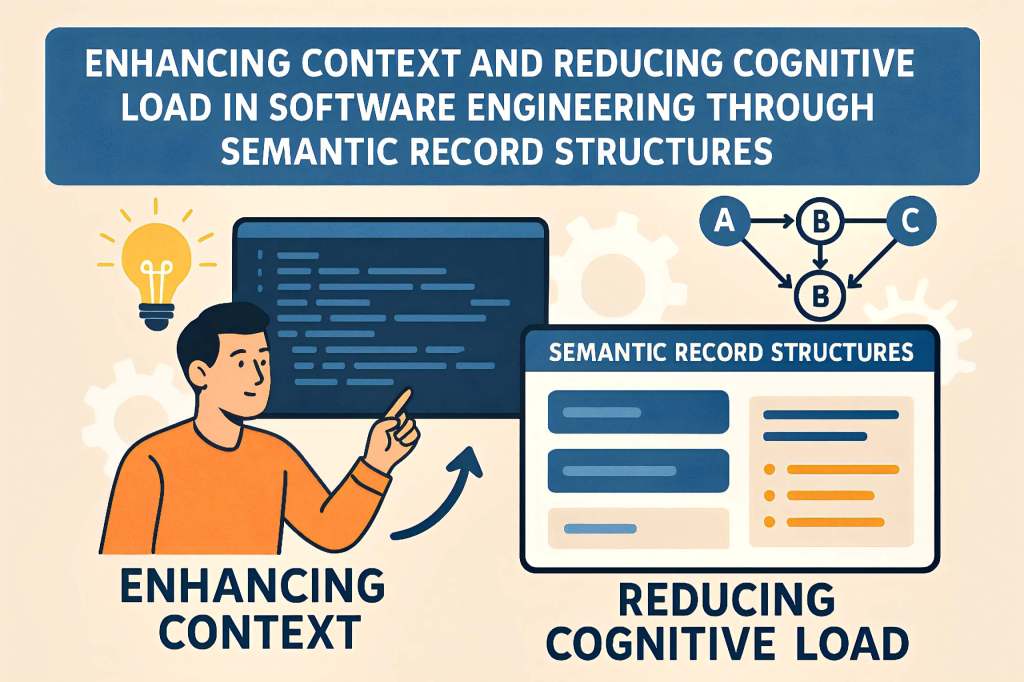
Enhancing Context and Reducing Cognitive Load in Software Engineering Through Semantic Record Structures
This essay emphasizes the importance of clarity and maintainability in software engineering, particularly through the use of semantic records. It demonstrates how encapsulating dictionary keys, like DateTime, within well-defined records (e.g., EffectiveDate) reduces cognitive load, enhances type safety, and aligns code with domain concepts, ultimately improving comprehension and adaptability.
-

Cyclomatic Complexity and Cognitive Load Analysis: LINQ vs. Traditional Loops
The analysis explores the relationship between cyclomatic complexity and cognitive load in software engineering through two methods for calculating moving averages. It highlights that lower cyclomatic complexity (LINQ version) can correlate with higher cognitive load, whereas a more traditional approach, despite higher complexity, may be easier for engineers to comprehend and maintain.
-

Supporting Neurodivergent Software Engineers: Reducing Cognitive Load and Context Switching for Colleagues with Autism Spectrum Disorder (ASD)
Software engineering teams often comprise individuals with various cognitive processing styles, including neurodivergent engineers, such as those with Autism Spectrum Disorder (ASD). Neurodivergent engineers may experience increased sensitivity to cognitive load—the mental effort required to process information, solve problems, and complete tasks—and context switching, which is the mental shift that occurs between tasks or concepts.…
 Software Engineering on the Spectrum