Tag: software engineering
-
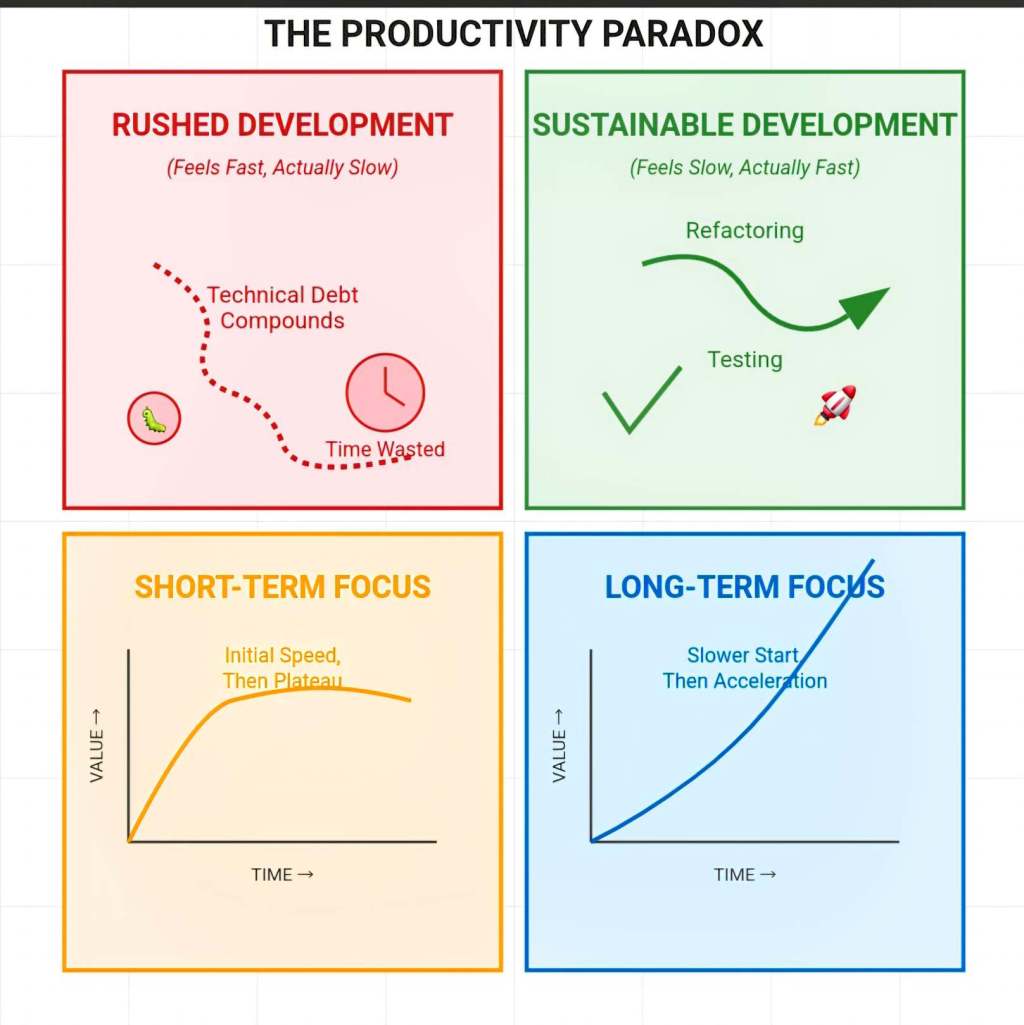
The Paradox of Productivity: How Refactoring and Testing Save Time
There is a common misconception that writing tests and refactoring code are indulgences we cannot prioritize when facing tight deadlines. However, many of the most productive developers have identified a counterintuitive reality: these practices enhance efficiency rather than hinder progress. This essay examines why refactoring and testing are not merely best practices but are, in…
-

Exploring Recursion with LINQ and C#
Language-Integrated Query (LINQ) in C# provides developers with a robust set of tools for data querying and manipulation. Although LINQ does not inherently support recursion, innovative methods can be employed to achieve this functionality. This article examines the concept of recursive LINQ, illustrating how to implement recursive behavior through LINQ methods in C#. This approach…
-
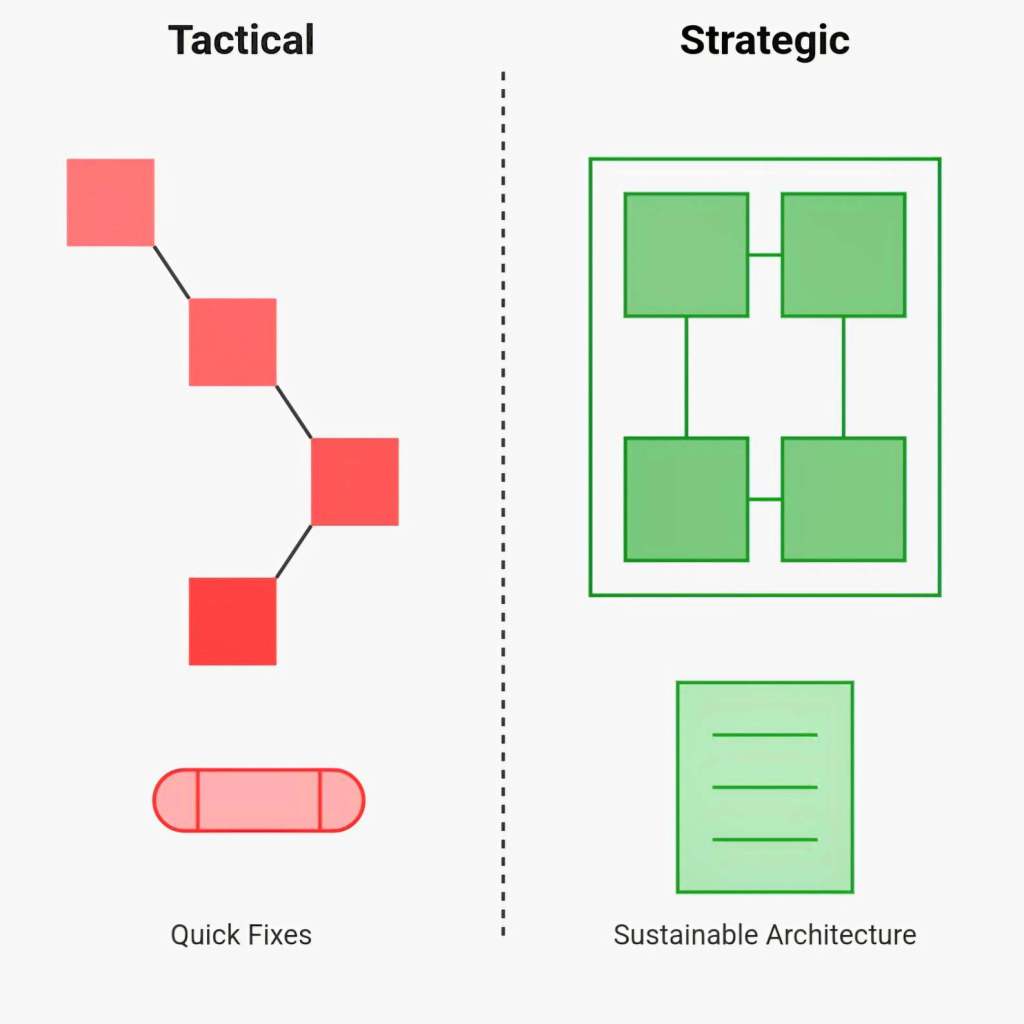
Tactical vs Strategic Programming: Finding the Right Balance
Are you focused on current needs or future objectives? This essay examines the essential tension in software engineering between tactical and strategic programming approaches. Tactical programming prioritizes immediate solutions, whereas strategic programming underscores the importance of long-term sustainability. Learn why adopting a strategic programming approach can yield superior outcomes and explore practical steps to transition…
-

Programming Language Theory: The Foundation of Modern Software Engineering
Exploring the theoretical foundations that have transformed software development, I am pleased to present a comprehensive examination of Programming Language Theory (PLT) and its significant influence on software engineering. From lambda calculus to contemporary type systems, this exploration highlights how theoretical frameworks have shaped the tools and languages that are integral to our daily work.…
-

The False Foundation: Why the House-Building Metaphor in Software Engineering Needs Renovation
I examine how this longstanding metaphor has influenced and, at times, misled our industry. While it played a crucial role in establishing software engineering as a respected discipline in the 1970s and 1980s, it is essential to acknowledge its limitations and consider how it may be hindering contemporary development practices. The metaphor has contributed to…
-

The Sacred Art of Code Aesthetics: A History of Programming Fonts and Colors
As a software engineer, I have observed numerous engaging discussions regarding the choice of programming fonts and color schemes. From enthusiastic Reddit threads to focused Slack conversations, developers often invest considerable time deliberating the advantages of Fira Code compared to JetBrains Mono, or whether the Dracula theme is truly superior to Solarized Dark. This interest…
-

The Linked List Interview Question: A Rite of Passage
Have you ever found yourself at a whiteboard during a technical interview, with a marker in hand, tasked with implementing a linked list in Pascal? This fundamental data structure, despite its historical significance, continues to serve as an effective evaluation tool for software engineering candidates. But what explains the lasting relevance of this particular challenge?…
-

The Hacker Ethic: A Philosophy of Innovation and Empowerment in Software Engineering
The hacker ethic is a philosophy emphasizing the accessibility of information, meritocracy, and the enhancement of human potential through technology. It encourages software engineers to focus on collaboration, continuous learning, and ethical considerations, transforming them into innovators who prioritize social impact. This mindset fosters creativity and champions collective progress in technology.
-

The Dialectic of Innovation: C# and Programming Language Theory
Programming languages serve as essential instruments for addressing computational challenges, reflecting over sixty years of development in theoretical computer science. Since its creation, C# has distinguished itself as an advanced language that engages with and reevaluates fundamental principles of programming language theory. Drawing from a diverse intellectual heritage that includes functional programming, type theory, and…
-
The Continuous Evolution of Computational Imagination
The evolution of software engineering reflects human innovation across generations, from the Silent Generation’s foundational programming to Generation Z’s AI and ethical computing focus. As complexity increased, methodologies evolved, transitioning from structured approaches to agile frameworks, highlighting a growing collaboration and adaptability. Each era addresses societal changes, emphasizing an ongoing human algorithm of progress.
 Software Engineering on the Spectrum